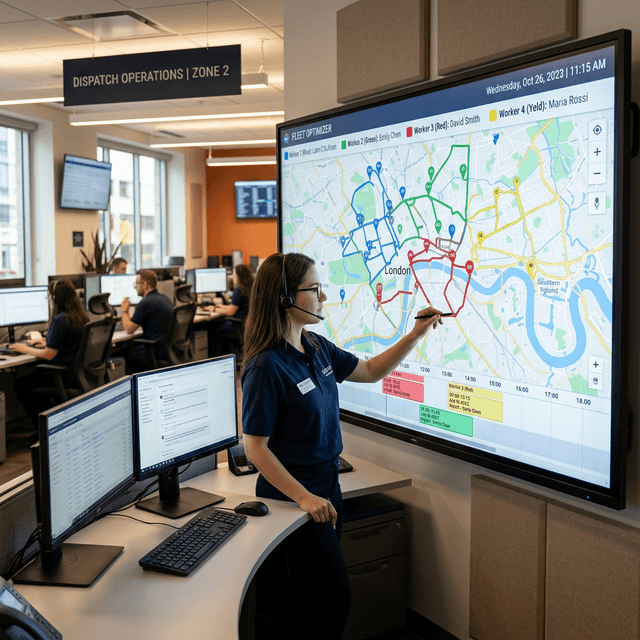
Specialty field service — commercial hood cleaning, rolling truck repair, and partner-driven home services — shares one problem: the phone is the bottleneck. Generic CRMs schedule jobs after someone answers. AI-native dispatch software answers, qualifies, books, and routes in one loop, starting at $299/mo per location with unlimited users.
Why specialty FSM is not "small ServiceTitan"
Enterprise field service platforms were built for 50-truck HVAC roll-ups with dedicated implementation teams. That model breaks for operators who run three hood routes and a compliance binder, or two mobile repair rigs on Interstate corridors, or a referral network of plumbers who need answered calls before they buy software themselves.
These businesses share traits generic FSM marketing ignores:
- Compliance and liability language on every call (NFPA 96 hood intervals, DOT roadside events, permit numbers)
- After-hours urgency without a night dispatcher
- Quote vs. fixed-fee split on the same phone line
- Partner economics — affiliates and referral programs care about provable conversion, not feature checklists
The buying question in 2026 is not "Do we need a CRM?" It is: "Does our stack answer the phone and dispatch the right truck without adding headcount?"
Commercial hood cleaning: compliance calls that must book the first time
Hood and exhaust cleaning is a recurring compliance service, not a one-off residential ticket. When a restaurant manager calls at 10 PM because the health inspector flagged grease buildup, you need intake that captures:
- Hood type (upright, conveyor, pizza oven stack)
- Last professional cleaning date
- Fan count and rooftop access constraints
- Preferred night window (post-close only)
Missed call math: A single lost commercial hood job often represents $400–$1,200 in service revenue plus a multi-year recurring route. Voicemail is not a lead — it is a pass to the competitor who picked up.
What to demand from hood-cleaning dispatch software
| Capability | Why it matters |
|---|---|
| AI voice with vertical vocabulary | Callers say "Ansul" and "NFPA 96" — not "general maintenance" |
| Recurring route templates | Quarterly vs. monthly intervals by customer type |
| Photo-ready work orders | Before/after evidence for inspectors and property managers |
| Zone dispatch by crew | Route trucks by city cluster, not drag-and-drop guesswork |
| Deposit or PO capture on call | Commercial accounts still pay mobilization fees upfront |
DispatchNode ships hood-cleaning qualification flows out of the box and powers dedicated vertical brands for operators who want OSHA- and NFPA-aware booking pages without building custom software.
Mobile truck repair: the rolling shop needs rolling dispatch
Mobile diesel, fleet roadside, and refrigerated unit repair operate like emergency rooms on wheels. The caller is often a fleet manager with a unit down on a deadline — not a homeowner browsing time slots.
Your intake layer must distinguish:
- Roadside emergency — location pin, unit number, fault code if known
- Scheduled PM — yard address, fleet slot, recurring interval
- Quote-required diagnostic — create a lead, do not auto-dispatch a flat fee
- AI answers in under 3 seconds with fleet-appropriate greeting.
- Caller provides unit ID, location, and symptom (no start, air leak, reefer alarm).
- System checks which mobile bay is closest via zone + GPS-aware routing.
- Fixed-fee roadside dispatch books immediately; complex jobs enter quote workflow.
- Stripe deposit link sent by SMS before the tech rolls — reduces no-shows on emergency rates.
Mobile repair vs. shop-first software
Shop-first tools assume the vehicle comes to you. Mobile-first dispatch assumes the technician is the storefront. That means unlimited field users at $0/seat, multilingual intake for diverse driver pools, and integrations that sync to QuickBooks without a middleware project.
Home services referrals & affiliates: prove the phone layer, not the slide deck
Referral partners — industry consultants, supplier reps, marketing co-ops, and affiliate publishers — do not need another 40-tab CRM demo. They need evidence that calls convert when their audience tries the stack.
What partners evaluate (publicly safe checklist)
| Question | Green flag | Red flag |
|---|---|---|
| Is AI answering included in base pricing? | Yes, from $299/mo tier | AI sold as $99–$599 add-on |
| Per-seat tax on technicians? | Unlimited users | $29/user/month stacks fast |
| Can leads webhook out? | API + MCP documented | Export CSV only |
| White-label booking? | Embeddable widget + subdomain | Vendor-branded only |
| Partner reporting | Aggregated conversion metrics | No call→book visibility |
DispatchNode publishes pricing, offers a partner program, and documents integrations for teams that wire referral funnels without custom engineering sprints.
Ask any vendor: "Show me answered-call rate and booked-job rate for a business like mine — not a generic SaaS funnel." Specialty FSM buyers should prioritize platforms where the AI layer is native, not a third-party answering service with a Zapier patch.
2026 buying matrix: specialty operator lens
| Need | Legacy FSM + answering service | AI-native dispatch (DispatchNode) |
|---|---|---|
| After-hours coverage | $200–$1,000/mo + per-minute | Included in plan minutes |
| Hood / fleet vocabulary | Custom scripts, weeks of setup | Vertical templates, live in minutes |
| Quote vs. fixed-fee routing | Manual dispatcher decision | Configurable per service catalog |
| User licensing | Per tech / per seat | Unlimited at $0/seat |
| Go-live time | Weeks to months | Same-day for most operators |
Compare head-to-head with tools you may already use: ServiceTitan alternative, Jobber alternative, Housecall Pro alternative.
Implementation without an implementation team
Specialty operators rarely have a "operations engineer." A practical rollout looks like this:
- Pick primary vertical template (hood cleaning, mobile repair, or general home services)
- Forward the main line to the AI number; keep human overflow if desired
- Define zones — city clusters for hood routes, corridor maps for mobile repair
- Tag technicians — certifications, equipment (pressure washer vs. vacuum truck vs. reefer tools)
- Connect Stripe + calendar — deposits on emergency calls, no double-booking
- Embed widget on the site referral partners send traffic to
Most teams are live in under 30 minutes of configuration — not a quarter-long migration.
Frequently asked questions
Is hood cleaning too niche for AI dispatch?
No. Niche is an advantage — generic IVR trees frustrate restaurant managers. Vertical-trained AI asks the right follow-ups (fan count, access, last service) and books the correct recurring interval.
Can one platform run hood routes and mobile repair divisions?
Yes. Multi-vertical orgs use separate service catalogs, zones, and skill tags under one organization with unified billing and reporting.
What should referral partners disclose to their audience?
Partners should share pricing transparency, trial terms, and what the AI does on a live call — not internal revenue splits or unpublished incentives. DispatchNode's public pricing page and demo booking are the source of truth.
Next steps
If you run commercial hood routes, mobile fleet repair, or refer home-service operators who lose jobs to voicemail, start with a live call demo — not a feature spreadsheet.
- Book a 30-minute demo — hear AI handle a specialty call
- Start a free trial — 14 days, no credit card
- Read: What is AI dispatch software?